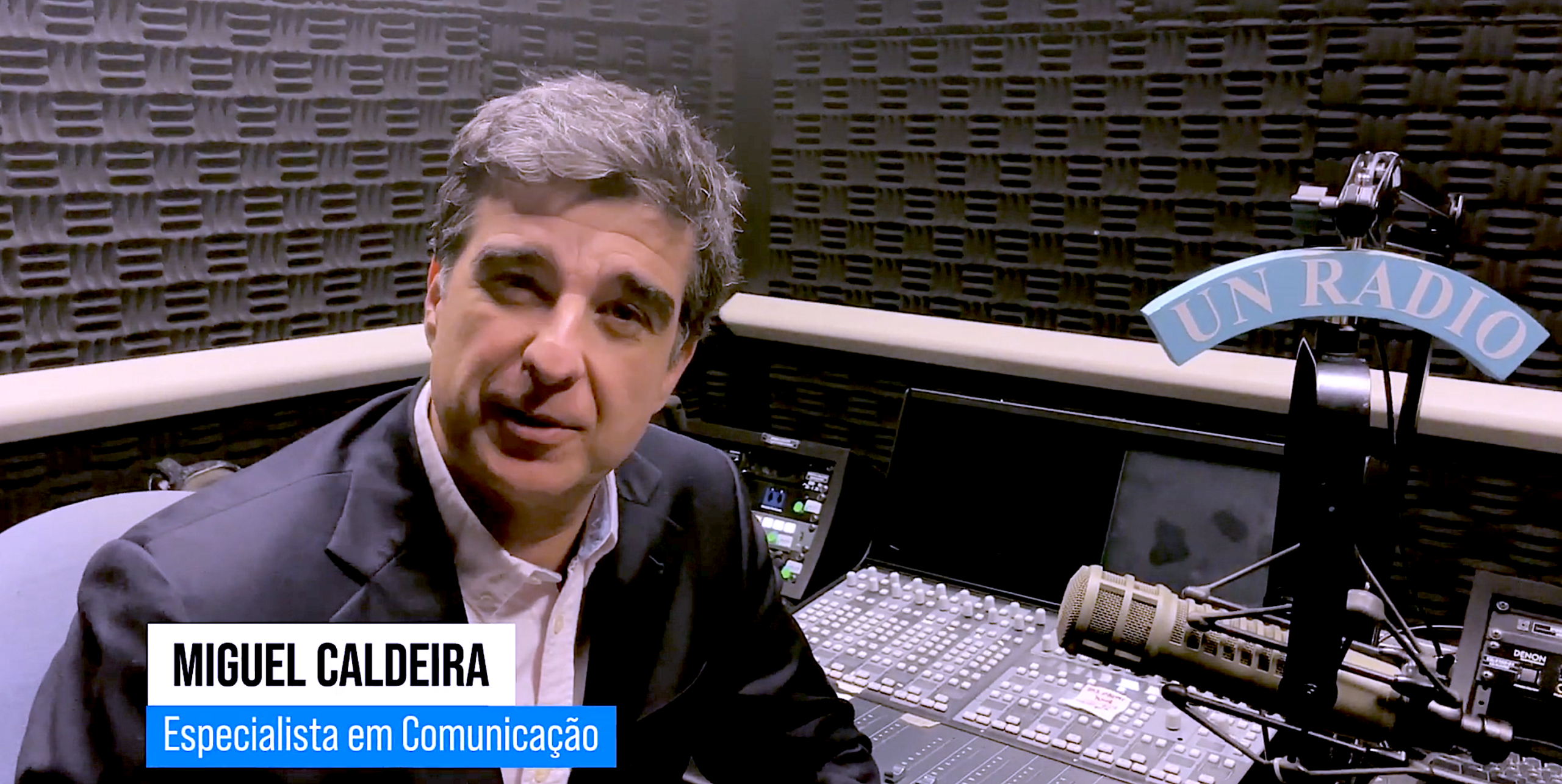
Miguel Caldeira worked in programming at the radio station during years of instability in the Portuguese-speaking country; he recalls that radio helped displaced families decide when to return home and also contributed to popularizing the Portuguese language.
On February 13, the United Nations marks World Radio Day. This year, the date highlights the importance of radio in conflict situations and also celebrates the 75th anniversary of UN Peacekeeping Missions.
UN News spoke with Portuguese national Miguel Caldeira, who led radio broadcasting operations in Timor-Leste during years of political instability in the Southeast Asian nation.
Radio as the only means of communication
He recalls that news broadcasts were one of the only ways to deliver information to the population and notes that, due to a lack of resources, programs relied on volunteers and “a great deal of courage” to go on air.
“Radio was undoubtedly the main source of information. People—especially those living far from the capital or the two main cities—only received news through the radio. Information came in drips, because although there was a community radio station in each of Timor’s districts, there was often no electricity, and the volunteers working at the different stations did not always have full availability to broadcast. Many times, they themselves did not even have access to that information, but when they did, they would travel to these communities with great courage and dedication to share it. I remember that in one of the districts, the radio station operated from a bathroom—they had a mixing desk set up on top of the toilet, and that’s where everything was done, without any embarrassment.”
The United Nations operated in Timor-Leste from 1996 to 2012. Until 2002, the organization supported the country’s transition to independence and elections. However, the country continued to face political instability and humanitarian crises, which extended the mission’s mandate for another decade.
Social and Political Crisis
Miguel Caldeira told UN News about his memories of being in the country in 2006, during a period of political and social crisis in Timor-Leste.
During a visit to a displacement camp, home to around 100,000 people, he observed the importance of radio not only in delivering news but also in helping people understand when it was safe to return home.
“Radio once again became that single source of information. The government used it, and we produced radio programs to show people what the situation was like back home—whether it was safe to return or not—and to provide options. Many of these people and families had nothing; they only had the clothes they were wearing and little else. The government provided construction materials, for example, and transportation so families could return home. Many of these people had small radios in their tents to listen, and for those who didn’t, we installed loudspeakers in vehicles and went to the camps. People would gather around, and once again, through audio, they could understand their options—and many of these families eventually returned home. In the end, thanks to radio.”
The Portuguese Language in Timor-Leste
According to the journalist, radio also played an important role in promoting the Portuguese language in Timor-Leste.
“Timor-Leste is a country with two official languages. Indonesian is also widely spoken, but Tetum and Portuguese are the country’s official languages. One of the programs we created was called ‘Reconciliation.’ These programs began in Tetum, but we realized it was also important to start promoting content in Portuguese. So we built a network—both for television and radio—of Portuguese speakers, young people who were not journalists but who knew and had a strong interest in the language. They were the ones who began developing content in Portuguese, allowing communities—many of them—to reconcile with one another after the social and political upheavals the country experienced.”
Timor-Leste has Tetum and Portuguese as its official languages. During the most recent UN General Assembly, the country’s president, José Ramos-Horta, told UN News that by 2030, half of the population is expected to speak Portuguese.
According to him, in the early 2000s, only 1% of the population spoke Portuguese. Today, the government believes that number has reached around 40%.
Caldeira explains that Tetum is the most widely spoken language, with several variants. Although he is fluent in it, the journalist noted that when he did not know a word, he would substitute it with Portuguese—and everyone was still able to understand.
Original interview in Portuguese.